The Truth About Solar Panel Cleaning Efficiency in Melbourne
Melbourne has one of the highest rates of rooftop solar adoption in Australia, with hundreds of thousands of households generating their own electricity. Yet one question comes up again and again: does cleaning solar panels actually make a measurable difference? The honest answer is that it depends. In some conditions, solar panel cleaning can recover a meaningful amount of lost output. In others, rain does most of the work for you. This guide separates fact from marketing hype so you can decide what is worth your money.
How Dirt Affects Solar Panel Performance
Solar panels https://www.melbourneroofcleaningpros.com.au/locations/toorak-vic-3142/ convert sunlight into electricity, so anything that blocks light reaching the cells reduces output. This is known as soiling loss. Studies from research bodies in Australia and overseas generally show that soiling losses in temperate climates are modest, often in the range of 2 to 7 percent annually. However, in specific situations, losses can climb well above that, sometimes reaching 15 to 25 percent on heavily affected panels.
The type of dirt matters as much as the amount. Common contaminants on Melbourne rooftops include:
- Dust and fine soil: Particularly during dry, windy summers when northerly winds carry dust from inland regions.
- Bird droppings: These create concentrated shading on individual cells, which can disproportionately reduce the output of an entire panel string.
- Pollen and leaf litter: Common in suburbs with established trees, such as Kew, Camberwell, Ringwood and the Dandenong foothills.
- Moss, lichen and algae: Thrive in Melbourne's cool, damp conditions, especially on south-facing or shaded installations.
- Traffic and industrial grime: Panels near major roads, the port, or industrial areas in the west and south-east collect oily residue that rain does not easily remove.
- Ash and smoke residue: Following bushfire seasons, fine particulates can settle on panels across the metropolitan area.
Does Melbourne's Rain Keep Panels Clean?
Melbourne's reputation for changeable weather offers some natural help. Regular rainfall washes away loose dust and pollen, particularly on panels installed at a tilt of 20 degrees or more. For many homes, this means panels stay reasonably clean without intervention.
The problem is that rain is not a complete cleaning solution. Light drizzle, which is common in Melbourne, can actually turn dust into a thin film of mud that dries on the glass. Low-tilt panels, often installed to match a roofline, allow dirt to collect along the lower edge of the frame, creating a dirty band that causes shading on the bottom row of cells. Bird droppings, sap, and organic growth are rarely removed by rain at all.

In short, rainfall handles the easy dirt. It does not handle the stubborn buildup that causes the biggest efficiency losses.
When Solar Panel Cleaning Makes a Real Difference
Cleaning delivers the greatest return in particular circumstances. You are more likely to see a noticeable improvement if:
- Your panels are installed at a low tilt (under 15 degrees) or sit flat against a low-pitch roof.
- There are overhanging trees nearby that drop leaves, sap, or attract birds.
- Your property is close to a main road, industrial area, building site, or farmland.
- You have noticed visible streaking, moss growth, or bird droppings on the glass.
- Your system's monthly generation has dropped compared with the same period in previous years, without any change in weather or shading.
- It has been more than 12 months since the last professional clean.
If several of these apply, a professional clean is likely to pay for itself through recovered generation, particularly now that feed-in tariffs and retail electricity prices make every kilowatt-hour more valuable to household budgets in 2026.
The Hidden Risks of DIY Cleaning
Cleaning panels yourself can seem like an easy saving, but it carries real risks. Climbing onto a roof is one of the leading causes of serious household injuries in Australia, and wet glass is extremely slippery. Beyond personal safety, incorrect cleaning methods can damage your system.
- Abrasive materials can scratch the anti-reflective coating on the glass, permanently reducing efficiency.
- High-pressure water can force moisture past seals and into junction boxes, and may void your manufacturer's warranty.
- Harsh chemicals can degrade frames, seals and coatings.
- Cleaning hot panels with cold water can cause thermal stress. Early morning or late afternoon is best.
- Hard tap water leaves mineral deposits and spots that can actually attract more dirt.
Most panel manufacturers recommend soft brushes, deionised or filtered water, and gentle, non-abrasive cleaning agents. Professionals use water-fed pole systems that clean from the ground or a safe access point, avoiding the need to walk on the panels.
Why the Roof Beneath Your Panels Matters
Solar panel efficiency does not exist in isolation. The condition of your roof and gutters directly affects how clean your panels stay and how well your whole system performs over its lifespan.
Tile Roof Cleaning
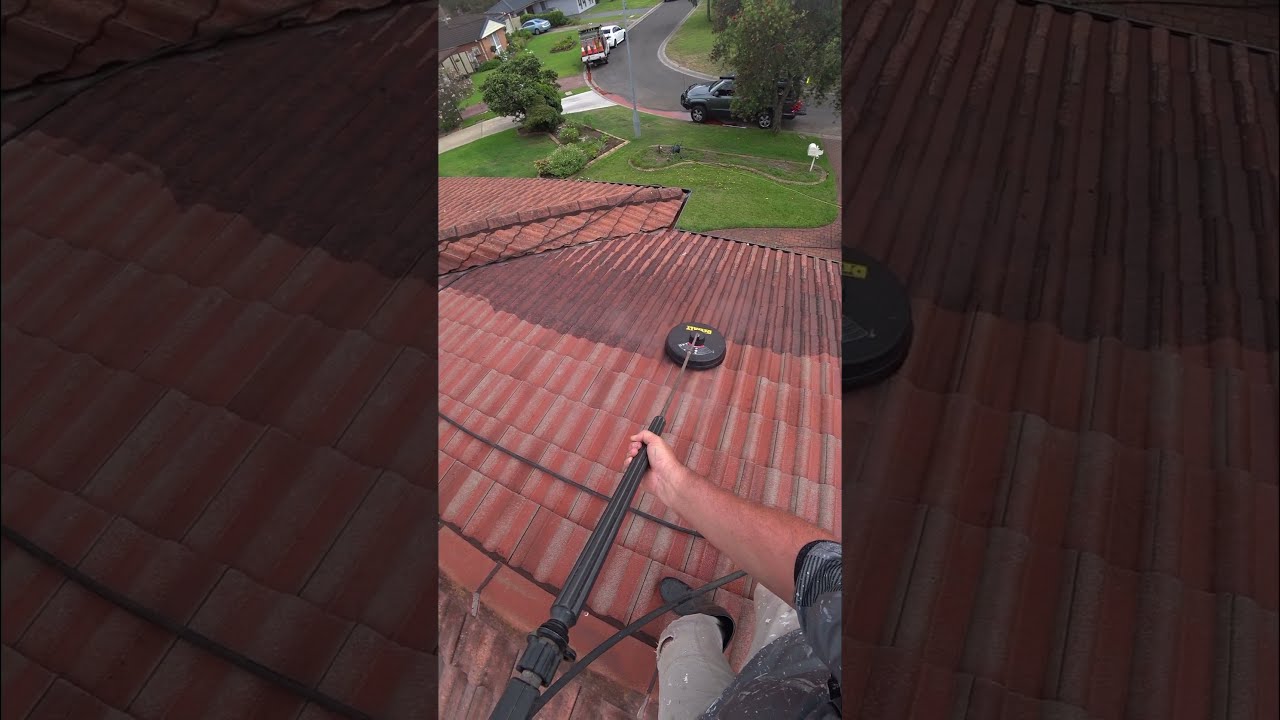
Many Melbourne homes have concrete or terracotta tiles that develop moss, lichen and black algae. These organisms release spores that drift onto nearby panels and spread. A professional tile roof cleaning service removes biological growth at the source, and when combined with roof washing and re-sealing where appropriate, it can extend the life of the tiles and reduce recontamination of the solar array.
Colorbond and Metal Roof Cleaning
Colorbond roof cleaning and metal roof cleaning are just as important. While metal roofs shed water quickly, they accumulate dust, salt (in bayside suburbs), and pollutants along ridges and in valleys. Run-off from a dirty roof flows beneath and around panel frames, and heavy buildup can stain the surface. Using the right low-pressure technique protects the Colorbond coating and keeps your warranty intact.
Gutter Cleaning and Fire Safety
Blocked gutters are more than a drainage problem. Leaf litter collected around a solar array is a potential fire fuel load, and in bushfire-prone areas of Melbourne's outer east, north and the Mornington Peninsula, this matters. Regular gutter cleaning reduces overflow, prevents water from backing up under roof sheeting near panel mounts, and removes the debris that blows onto panels during storms.
A Smarter Approach: Bundled Roof Maintenance
Because panels, roofing, and gutters all influence each other, combining services is often more cost-effective than treating each one separately. A comprehensive roof cleaning visit can include a panel clean, a roof wash, and a gutter clear in a single appointment. This reduces call-out costs, limits repeated roof access, and gives a technician the chance to spot problems early, such as cracked tiles, loose flashing, failing sealant, or damaged cabling.
How Often Should You Clean Solar Panels in Melbourne?
For most Melbourne homes, a professional clean every 12 months is a sensible baseline. Properties with heavy tree cover, nearby construction, coastal exposure, or low-tilt panels may benefit from cleaning every six to nine months. Homes on steeper pitches in low-pollution areas may stretch to 18 months, provided output is monitored.
The best method is to use your inverter's monitoring app. Compare your daily generation against similar clear days from previous months. A gradual, unexplained decline is a strong signal that cleaning is due.
What to Look for in a Professional Cleaner
Not all providers are equal. Before booking, check that the company:
- Carries public liability insurance and appropriate working-at-heights safety practices.
- Uses soft brushes and filtered or deionised water rather than pressure washers directly on panels.
- Understands manufacturer warranty requirements.
- Has experience with different roof types, including tile, Colorbond and other metal roofing.
- Provides clear, upfront pricing without hidden fees.
The Bottom Line
The truth about solar panel cleaning efficiency in Melbourne is balanced. Rain keeps many systems reasonably clean, but it cannot remove bird droppings, moss, sap, oily grime, or the dust film left by light showers. For panels affected by these issues, professional cleaning can restore output, protect your investment, and help your system deliver the returns you were promised when it was installed.
If you are unsure whether your system needs attention, start by checking your generation data and inspecting your panels from the ground. If you see visible buildup, or if your roof and gutters have not been maintained recently, booking a professional assessment is a low-risk step. A clean array, a healthy roof, and clear gutters work together to keep your home safe, efficient, and ready to make the most of Melbourne's sunshine in 2026 and well into 2027 and beyond.
Melbourne Roof Cleaning Pros
2/19 Chandos St, Cheltenham VIC 3192
ph. (03) 4514 5137